· emoji, news
The new emoji of 2026 your phone cannot show yet
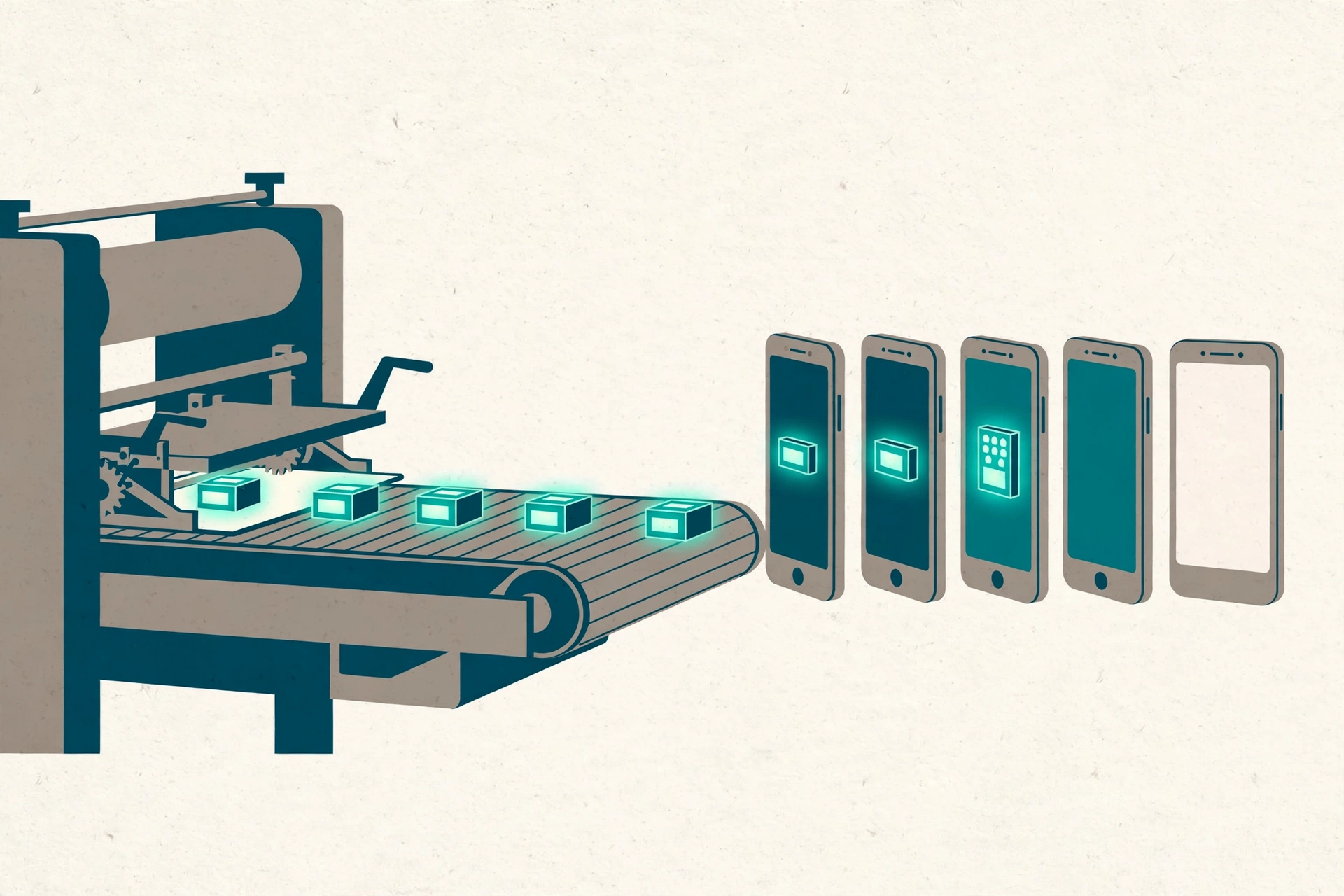
The new emoji of 2026 are nine Unicode 18.0 codepoints, including Cracking Face (U+1FAEB), Pickle (U+1FADD), and Lighthouse (U+1F6D9), made official on September 16, 2026. Almost no device can display them yet: a new emoji becomes visible only when vendors draw it into their emoji fonts, a rollout that runs from late 2026 through 2027.
On September 16, 2026, nine new emoji became official. If a friend could somehow send you one today, your phone would show you an empty box. Both halves of that sentence are true, and the gap between them is the whole story of how emoji actually ship: a standards body can declare a character, but only a font can draw it, and the fonts arrive on their own schedule over the following year.
What are the nine new emoji?
Unicode 18.0 added 13,007 characters in total, bringing the standard to 172,808, and nine of them are new emoji codepoints: Cracking Face (U+1FAEB), Leftward and Rightward Thumb Sign (U+1FAF9 and U+1FAFA), Monarch Butterfly (U+1FACC), Pickle (U+1FADD), Lighthouse (U+1F6D9), Meteor (U+1FA8B), Eraser (U+1FA8C), and Net With Handle (U+1FA8D). With the thumb signs’ skin tone variants, Emoji 18.0 recommends 19 additions. The list had a lively draft season: a Face With Squinting Eyes held a codepoint until January 2026, when it was replaced by Cracking Face (U+1FAEB), and an Apple Core was dropped from the draft in October 2025, the second year running it failed to make the cut.
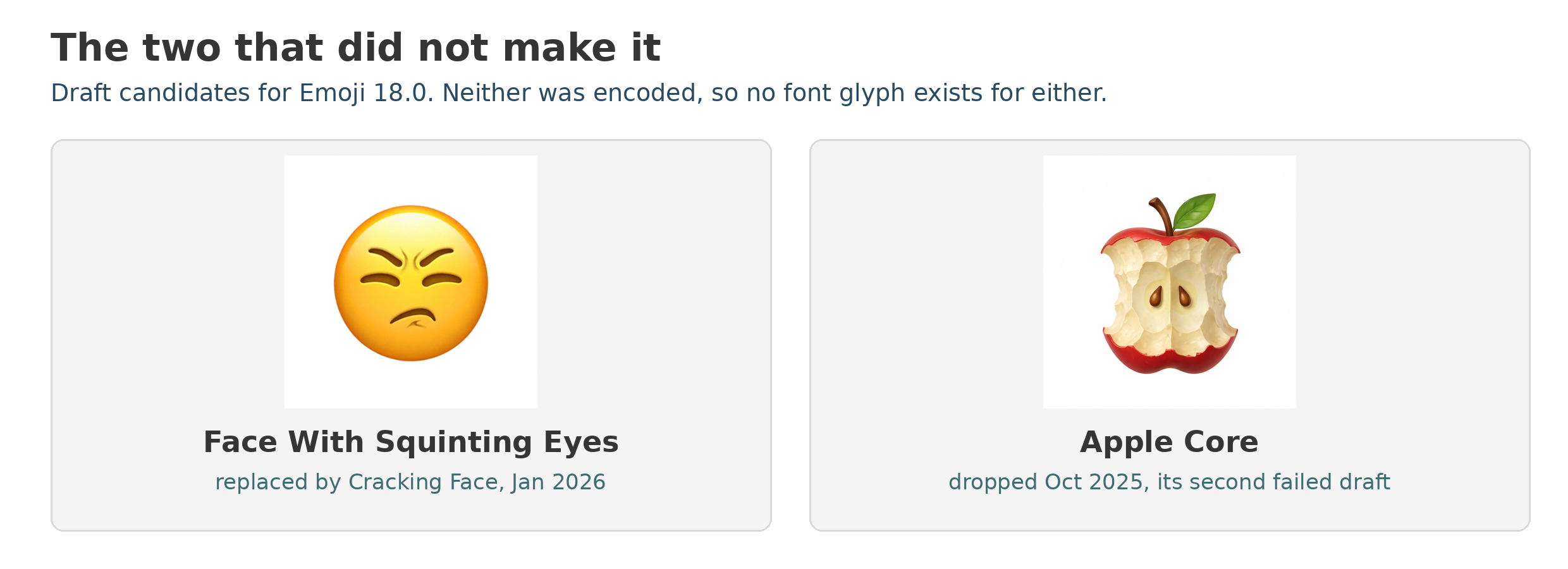
Neither candidate was ever encoded, so no font glyph exists for either; the artwork is an illustrator’s idea of how they might have looked.
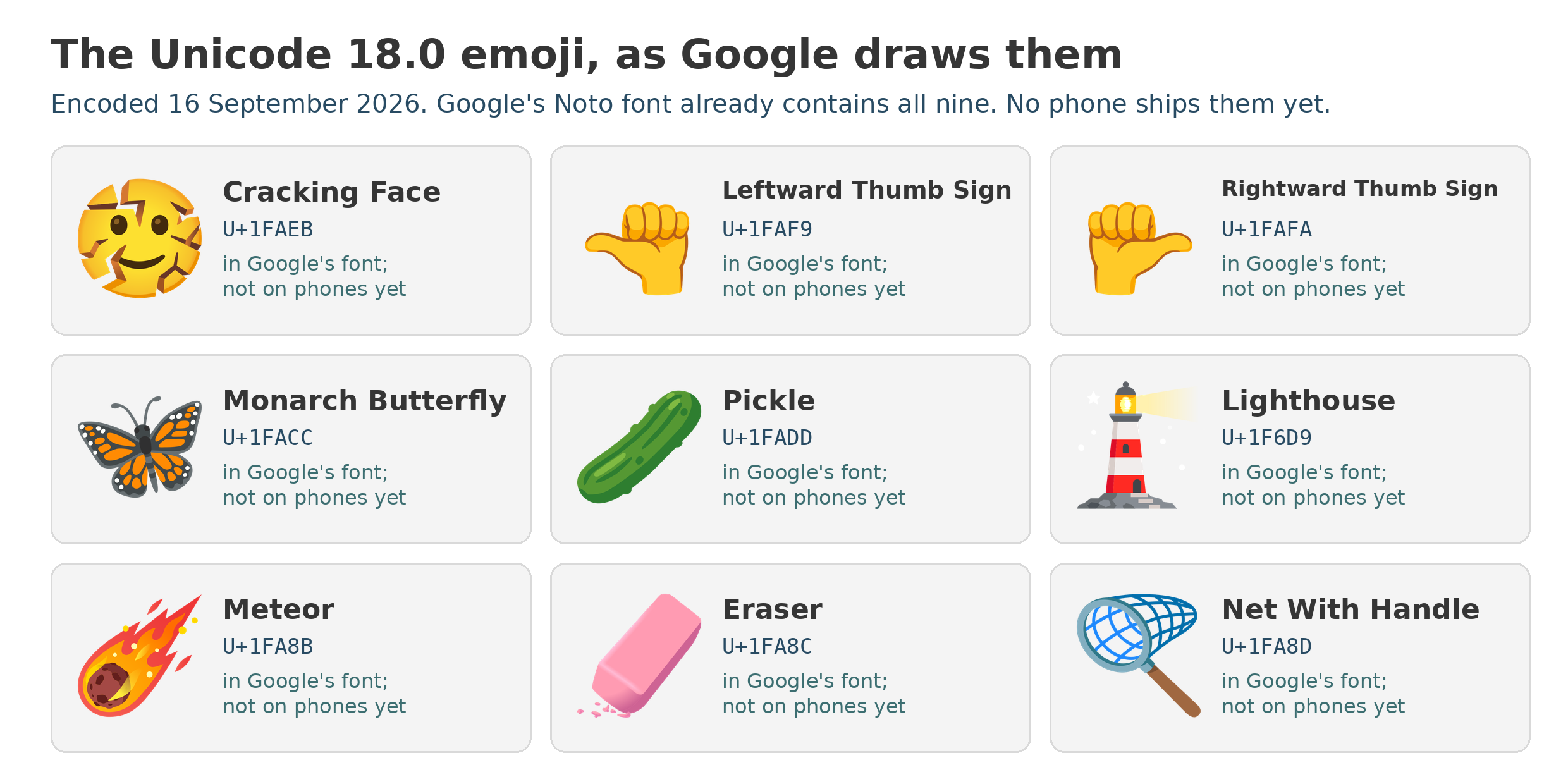
One font can already draw them. Google updated its Noto Color Emoji web font within weeks of the standard, true to its habit of moving first, and the tiles above are its actual glyphs, rendered from that font. A second font can draw them too, and it is not a vendor’s: Frank Rausch’s hand-drawn FrankMoji, an independent COLRv1 emoji font released in September 2026, already supports all of Unicode 18.0. What does not exist yet is a phone that ships them. The set is still visible today in the one place the Noto drawings already live on the web: the emoji.party keyboard carries a New in Emoji 18.0 row, where the nine can be seen as drawn glyphs and copied as a string, tofu-free, months before the phones arrive.
How does an emoji get from a proposal to your phone?
Year one: the proposal. Anyone may propose an emoji, through Unicode’s public proposal process, and the submission has to argue with evidence: search data showing expected frequency, proof the concept is visually distinct, and reasons it cannot be expressed by an existing emoji. Logos, brands, specific people, and deities are excluded, and since 2022 no new flags are accepted at all. The bar is permanence: once a character is encoded it can never be removed, so the consortium grants codepoints the way you would carve something in stone.
September: the encoding. The emoji subcommittee spends the spring reviewing submissions, the technical committee approves the survivors, and the release is published each September as part of a full Unicode version. At that moment the new emoji exist completely and not at all: a codepoint, a name, and a plain black and white reference drawing.
The following year: the fonts. Each vendor now draws the glyphs in its own style, builds them into its color font, tests them, and ships them inside an operating system or app update, on its own calendar. Watch the last completed cycle, Unicode 16.0, to see the shape of it:
web font preview
One UI update
its own build
Android 16
iOS 18.4
Windows update
Google moves first, because it announces new emoji by releasing its Noto font. Samsung follows within about four to seven months: for Unicode 16.0 its rollout ran from January 2025, at the Galaxy S25 launch, to a broad release around April 2025. Apple traditionally lands the new set in a spring iOS update, roughly six months after encoding. Microsoft brings up the rear, close to a full year later. Unicode 17.0 followed the same pattern through 2026. For the 18.0 set, expect the same order: Google’s fonts late in 2026, most phones through the first half of 2027, Windows last.
Why are most “new emoji” not new characters?
When Unicode 17.0 was announced, the headline figure was 163 new emoji, and only seven were new codepoints. The other 156 were sequences, existing characters combined with skin tone modifiers and joiners to produce new visible emoji, including a Ballet Dancer (U+1F9D1 U+200D U+1FA70: person, joiner, ballet shoes) built by fusion rather than encoding. We unpack that machinery in emoji combos, but it matters here for one reason: sequences can sometimes render, at least partially, on systems whose fonts predate the release, while a genuinely new codepoint like Cracking Face (U+1FAEB) is an empty box everywhere until the fonts catch up.
What to do with this page
Treat the empty boxes as a countdown. As each vendor ships the 18.0 set, the same characters that are tofu today will quietly become pictures, first in Google’s web fonts, then on Samsung and Apple phones, then everywhere. We will update this post as the fonts land, which makes it the one page on the site guaranteed to become more true over time.